

How to Stop Comparing Yourself to Others
Comparison looks harmless on the surface.
You scroll. You glance. You notice.
But slowly, quietly, it becomes something heavier — something that makes your chest tighten, your self-worth shrink, and your identity blur.
You begin to feel “behind.”
You begin to feel “less.”
You begin to forget your own story.
If you’re reading this, you’re already aware of it — and that awareness itself is powerful. Comparison doesn’t disappear overnight, but you can unlearn it. You can break the pattern. And you can build a self-worth so grounded that someone else’s highlight reel no longer shakes you.
This guide will walk you through:
- why comparison steals your peace
- how it damages self-worth and identity
- how to stop comparing yourself in everyday life
- how to build a strong internal foundation that keeps you centered
- how to reconnect with your value
Everything here is written with compassion and psychology-informed insight. And if you want to deepen your understanding of self-worth, you may also explore our guide Self-Worth vs Self-Esteem: What’s the Real Difference?— a foundational piece that pairs perfectly with this topic.
Let’s begin.
Why We Compare Ourselves in the First Place
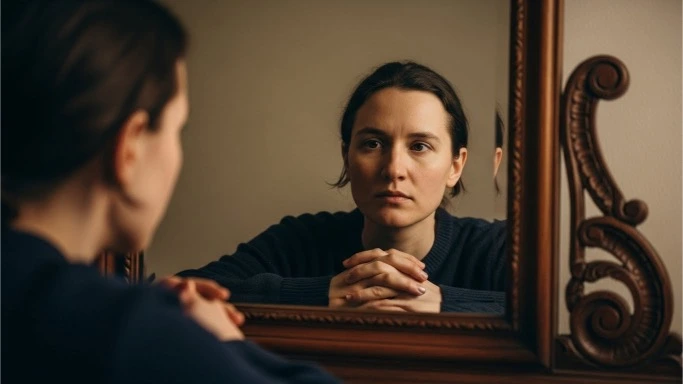
Comparison isn’t a weakness.
It’s human psychology.
Your mind is wired to scan your environment and evaluate where you stand. Thousands of years ago, this helped humans survive — knowing who was stronger, faster, or better equipped could protect you.
But today, comparison is less about survival and more about identity. It becomes harmful when:
- you tie your value to what others are doing
- you measure your progress against someone else’s timeline
- you forget that people only show the outcomes, not the journey
- you assume others are happier or more successful than you
Research shows that constant comparison increases anxiety, erodes confidence, and fuels feelings of inadequacy. A study published by the APA found that social comparison contributes strongly to depression and self-doubt in young adults — especially when tied to social media.¹
If you’re already navigating low self-esteem, comparison hurts even more. You can learn more about this emotional pattern in our guide Low Self-Esteem Meaning: What It Looks Like and How to Rise Again.
But here’s the hopeful truth:
Comparison can be unlearned when you understand what triggers it and how to rebuild your internal foundation.
The Hidden Ways Comparison Damages Your Self-Worth
Comparison doesn’t hit all at once. It affects you through small emotional shifts, such as:
✔ Comparing your beginnings to someone else’s middle
You see their success, not their years of failure.
✔ Feeling like you’re always “behind”
Even though there is no universal timeline for anything.
✔ Losing your inner voice
You begin measuring your value through other people’s achievements.
✔ Shrinking your identity
You stop focusing on who you are and start focusing only on who you aren’t.
✔ Becoming overly self-critical
You exaggerate your flaws while minimizing your strengths.
Over time, these habits create emotional patterns that make you forget your inherent worth. If left unchecked, comparison becomes a lens through which you misinterpret your whole life.
How to Stop Comparing Yourself to Others: 12 Practical, Healing Steps

This guide blends emotional insight, psychology, and real-life practices you can apply immediately. Take your time. Move step by step. Healing comparison is a process — not a race.
1. Understand That You Only See 1% of Someone’s Life
Comparison is deeply unfair because you’re comparing your behind-the-scenes to someone else’s edited moment.
People share:
- filtered photos
- happiest milestones
- big achievements
- perfect angles
- success without the struggle
What you don’t see:
- their failures
- their loneliness
- their insecurities
- their debt
- their relationship struggles
- their mental health battles
Your life is real. Their posts are highlights.
That alone changes the entire equation.
2. Accept That Your Journey Is Not Supposed to Look Like Theirs
This is not a cliché — it’s truth.
Your timeline is influenced by:
- your upbringing
- your trauma
- your healing pace
- your opportunities
- your personality
- your values
- your responsibilities
You can’t compare two people who didn’t start the same race, on the same day, with the same resources.
3. Build a Strong Inner Identity (This Stops Comparison at Its Root)
People compare themselves the most when:
- they don’t know who they are
- they aren’t sure what they want
- they tie their value to external approval
- they lack direction
- they haven’t built their own definition of success
This is where identity work comes in.
Questions to ask yourself:
- What do I actually want?
- What makes me feel proud?
- What does success look like for me?
- Who am I trying to impress, and why?
When you strengthen your identity, comparison loses its power.
Why? Because you stop looking outward for validation and start looking inward for direction.
4. Turn Jealousy Into Information (A Psychology-Backed Strategy)
Jealousy doesn’t mean “you’re a bad person.”
It means you’re noticing something you desire.
Instead of letting jealousy make you feel small, try using it as information.
Ask:
- What exactly am I feeling jealous about?
- What does this person have that I want?
- Is this aligned with my true values?
- What step could I take today toward this desire?
Psychologists often describe jealousy as a compass emotion — it points to desires we’ve ignored or suppressed.
Once you decode the signal, it becomes motivation rather than pressure.
5. Limit Your Exposure to What Triggers Comparison
This doesn’t mean deleting everything.
It means curation — a form of emotional self-defense.
Consider reducing exposure to:
- accounts that make you feel inadequate
- people who brag excessively
- toxic productivity content
- unrealistic beauty or lifestyle standards
You can replace them with accounts focused on:
- healing
- self-worth
- balanced living
- growth and self-love
- relatable real-life content
You’re not weak for unfollowing people.
You’re emotionally intelligent.
6. Build Habits That Strengthen Your Self-Worth Daily
Comparison weakens when your sense of worth strengthens.
Try:
- morning journaling
- grounding practices
- affirmations rooted in action
- gratitude listing
- boundary setting
- body movement
- self-compassion exercises
If you want help staying consistent, AI-based productivity tools can make tracking habits easier. For that, you can explore QuickTaskAI.com’s productivity tool recommendations — helpful if you want structure without overwhelm.
Small habits create a stronger internal foundation.
7. Heal the Root: Comparison Often Comes From Low Self-Esteem
Many comparison patterns begin in childhood:
- being constantly evaluated
- being compared to siblings
- being criticized
- receiving conditional love
- experiencing academic pressure
These early experiences shape how you view yourself.
8. Focus on Your Strengths and Accomplishments
Your mind is trained to notice threats — not positive things.
This makes you overlook your own gifts.
Try keeping:
- a strength list
- a progress journal
- a “wins” folder
- a compliments log
- a pride checklist
These practices rewire your brain to recognize your worth, not minimize it.
Research suggests that intentional focus on personal strengths increases confidence and reduces emotional reactivity.
9. Reduce Competitive Environments When Possible
Sometimes comparison doesn’t come from insecurity — it comes from the environment itself.
Workplaces, families, and social circles can create:
- pressure
- rivalry
- constant evaluation
- perfectionism
- competitiveness
If an environment forces you into comparison, it might not be the right place for your emotional well-being.
You deserve spaces where you can grow, not shrink.
10. Reframe Success in a Way That Honors Your Authentic Life
Stop viewing success through society’s narrow lens.
Try defining success around:
- peace
- stability
- authenticity
- emotional growth
- meaningful relationships
- aligned goals
This redefinition lowers comparison naturally because you’re evaluating success through your own values — not someone else’s story.
11. Practice Compassion Toward the Part of You That Compares
Don’t shame yourself for comparing.
You’re human.
You’re emotional.
You’re learning.
Speak to yourself the way you would speak to a friend:
“You’re not behind.”
“You’re growing at your pace.”
“You’re allowed to take time.”
“You’re doing enough.”
Self-compassion is one of the most powerful tools for healing comparison.
12. Strengthen Your Connection With Your Body and Mind
Comparison often happens when you’re disconnected from yourself.
Try grounding practices like:
- deep breathing
- mindful stretching
- walking outdoors
- slow mornings
- quiet reflection
These practices reconnect you with your identity.
You can explore more about the mind-body connection through on hormone effects on mood and motivation — helpful for understanding why emotional states influence your thoughts.
What Happens When You Stop Comparing Yourself

You feel lighter.
You feel more present.
You feel more connected to your goals.
And most importantly:
You stop measuring your worth through someone else’s story.
Comparison loses its grip when you finally anchor yourself in your own identity — your own timeline — your own worth.
The bottom line: You Don’t Need to Be Them — You Need to Be You
The truth is simple and powerful:
You are not behind.
You are not less.
You are not inadequate.
You are becoming.
Comparison will try to disconnect you from who you are.
Self-worth will bring you back home to yourself.
If this resonates, you may also want to explore more guides on healing, identity, and emotional wellness in our foundational Start Here page — created to support you gently through your growth.
You deserve to live a life where you appreciate your own story instead of comparing it to someone else’s highlight reel.
Your worth is not measured by comparison — it’s measured by who you are becoming.
Our Authority Sources
- APA — Social comparison impact on mental health
- NIH – Usage Frequency and Audiences’ Risk Perception, Emotion and Behavior.
- Positive Pshycology – Intentional focus and confidence
- Psychology Today — jealousy as an emotional signal
- Self-compassion research by Dr. Kristin Neff